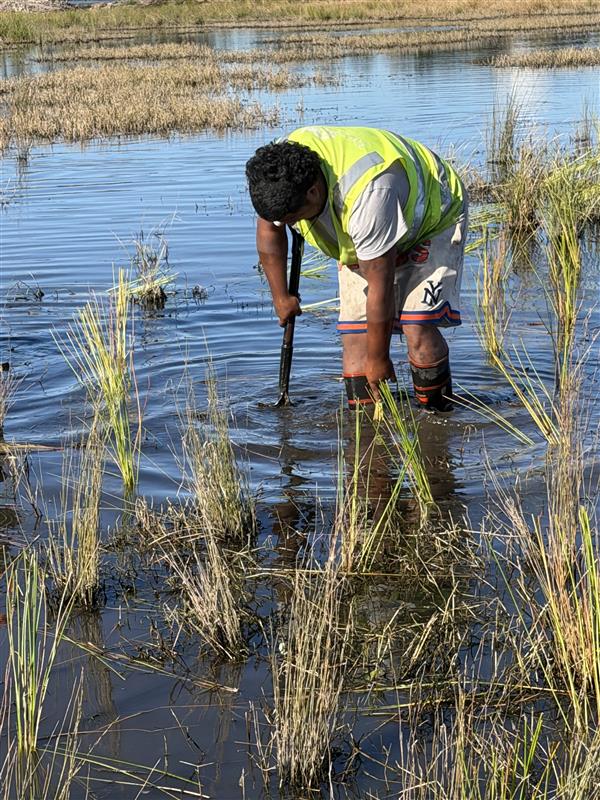



Tapuika has finished its first half year of maintenance in the Rangiuru Business Park stormwater pond, caring for two seasons of planting. The focus has been on the eradication of pest plant species early, before they get established and monitoring the health of the plants.
The diverse varieties of sedges, grasses and trees are growing and providing filtration as well as a home for new ecosystems within the wetlands despite the challenging weather conditions in the early part of the year.
Beyond maintenance, the team of Natalie, Kiwa, Hamiora, Sigourney and Hendrix are recording and noticing some amazing changes that are occurring in the wetlands.
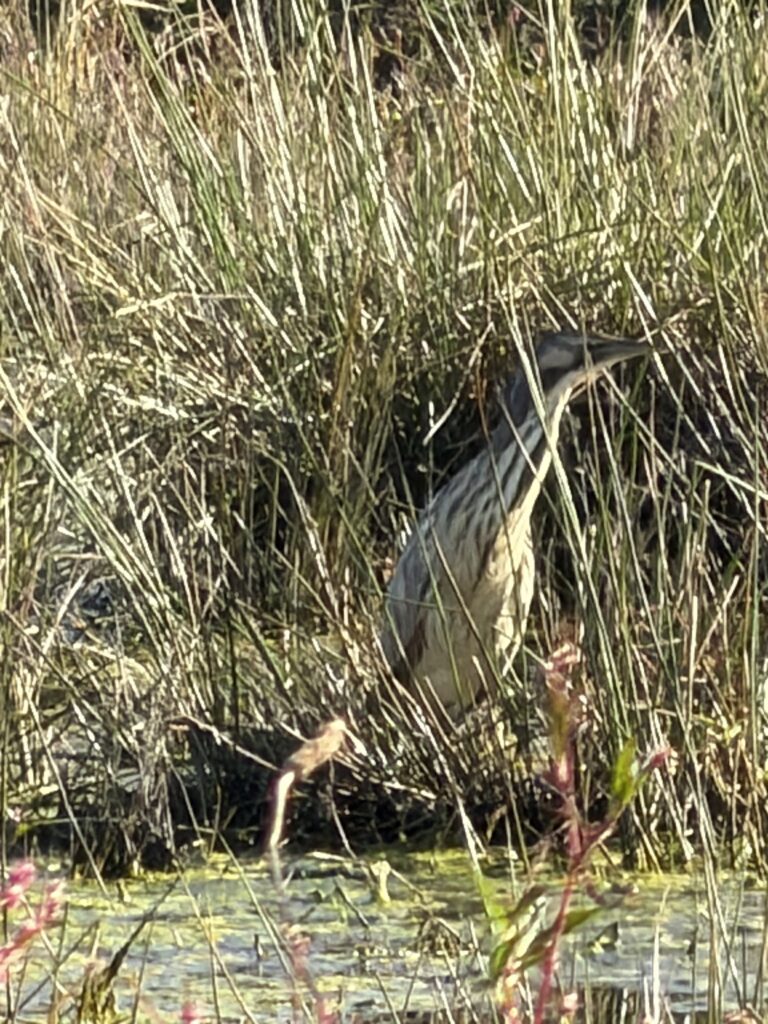
Biodiversity is flourishing with so many bird species making the pond their home, such as the Royal Spoonbill (Kōtuku ngutupapa), the White-faced heron (Matuku moana), and recently the most exciting discovery – the very shy and well camouflaged Australasian Bittern, the Matuku hūrepo. Numbers of these birds have declined as their wetland habitat has disappeared over the last few decades, so for Tapuika and Quayside, seeing thriving wetlands, with the emergence of heritage birdlife benefitting the taiao, through the creation of necessary infrastructure, is a real feeling of achievement.
Work like this sits at the heart of what our owner, Toi Moana Bay of Plenty Regional Council, is working towards for our region. A wetland that filters stormwater and restores native bird habitat is a healthy environment being actively maintained. A business park designed with ecological resilience built in is sustainable development in practice. The role of Tapuika, as tangata whenua and mana whenua bringing kaitiakitanga and mātauranga to the mahi, reflects the kind of partnership the council’s Te Ara Poutama outcome points to. Communities and iwi working together toward something better for the taiao and for future generations.
Mauri ora roa – Invested in our Future.